The faces of oud
From the middle east to refined europe
SCENT AND STORY
6/18/2026
By María Laura Ortiz Chiavetta — Aroma Storyteller, Winelux Scent & Story
There are ingredients that cannot be explained. They must be experienced. Oud is one of them.
Calling it simply "agarwood" is technically correct and narratively insufficient. It is like describing wine as "fermented grape juice": true, but empty. Oud is one of the oldest, most coveted, and most misunderstood raw materials in global perfumery.
I understood this one afternoon at Les Senteurs, in Belgravia, where within the space of an hour I smelled five versions of the same ingredient and had the sensation of having travelled across at least three continents without moving from the marble counter.
Oud as Territory
Oud is the resin produced by the Aquilaria tree when it is attacked by a specific fungus. Not all trees produce oud: only infected ones. And that infection, that process of defence and transformation carried out by the tree over years, is what generates one of the most olfactively complex substances in existence.
The result is dark, animalic, profound. With facets ranging from earthy to leathery, from smoky to sweet, from medicinal to almost sacred. In the Middle East it has been burned as incense for centuries. In Japan, there is an entire ceremony, Kōdō, dedicated to appreciating its aroma with the same reverence with which Chadō is practised with tea.
Anello: The Oud That Is Not Afraid to Disturb
Anello is a tropical oud. It contains durian. Putting it into a perfume is a statement of intent.
The result is exactly what it promises: an oud that does not ask for permission. Tropical in its opening, with that fruity density that recalls the markets of Bangkok or the streets of Singapore, oriental at its heart, with the dark resin of agarwood gradually emerging like the continuo bass line of a musical composition.
In its logic, it reminds me of certain long-maceration natural wines: the ones that frighten those expecting something conventional and delight those seeking exactly the opposite.
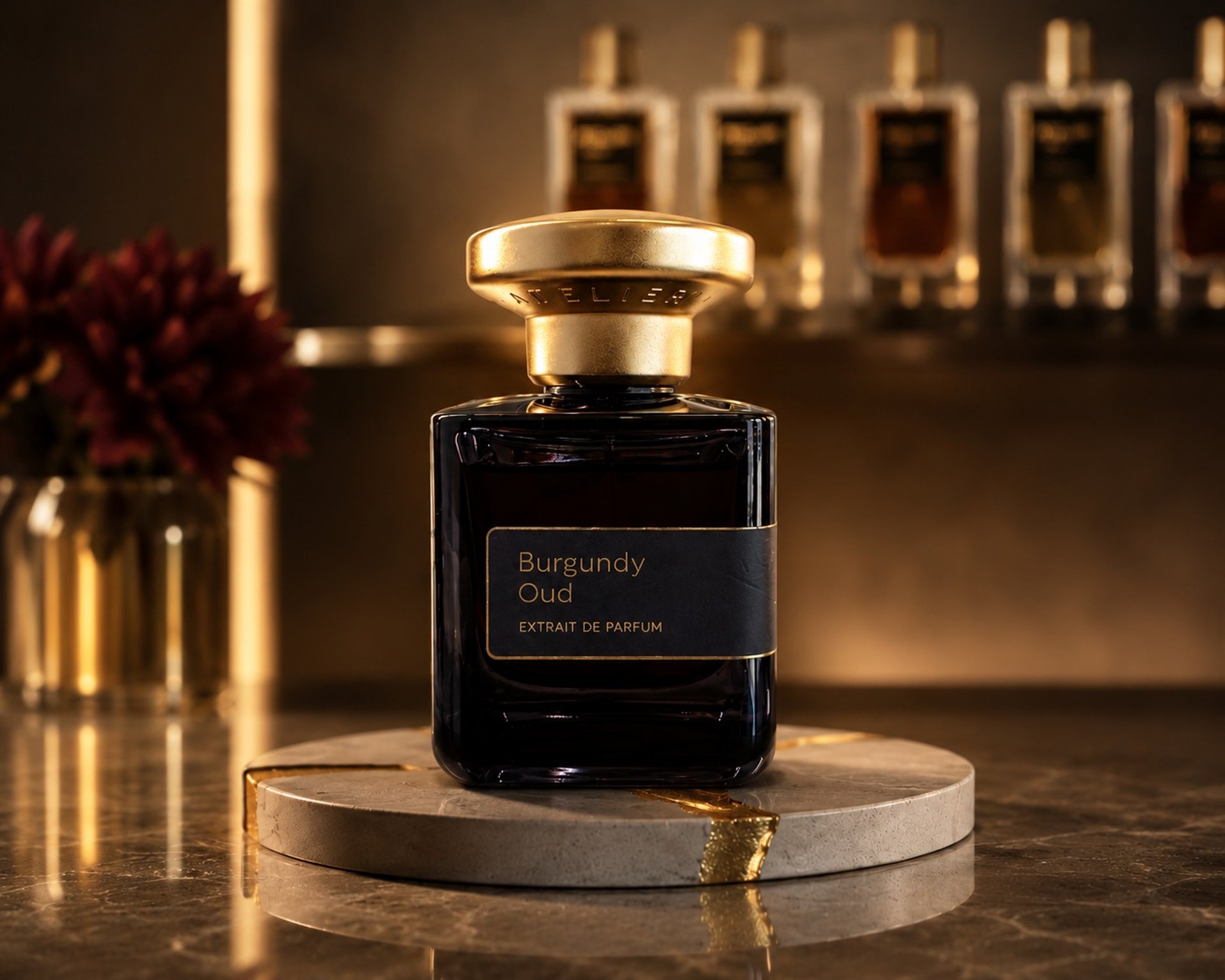
Burgundy Oud: When Oud Learns to Be European
Burgundy Oud is a radical transformation of the ingredient. Here, oud does not lead — it converses. It sits at the base of the composition while blackcurrant and magnolia build the heart. The result is fruity without being sweet, refined without being cold.
Burgundy, in the world of wine, signifies restrained elegance, complexity that does not display itself, depth that reveals itself over time. Burgundy Oud functions in exactly the same way.
Black Oregano: The Oud That Comes from the Background
If Anello is extroversion and Burgundy Oud is conversation, Black Oregano — by Atelier Materi, Haute Parfumerie Française — is introspection.
It is an Extrait de Parfum built in an unusual way: the oud sits entirely in the base. What arrives first is cardamom, oregano, musk, cashmere wood — and finally the oud, appearing once the fragrance has spent time on the skin, like someone entering a room after everyone else is already seated.
This inverted construction forces the wearer to be patient. In the world of mass perfumery, that is almost an act of resistance. It was my favourite fragrance of the visit.
Golden Oud and Palissandre Night: When Geneva Speaks
Mizensir — the Geneva maison and the creations of master perfumer Alberto Morillas. Golden Oud is luminous, warm, solar. Here, the oud is the invisible structure that supports everything without imposing itself. Palissandre Night is its nocturnal counterpart: darker, denser, with rosewood adding a woody layer that complements the oud without competing with it.
What distinguishes Mizensir is the sense of inevitability within each composition. Nothing is superfluous. It is haute couture perfumery in the most precise sense of the term.
Whispering Oud: When Oud Becomes Mythology
Kajal built something entirely different around oud: a mythological universe. Its fragrance Whispering Oud is the first chapter of a twelve-part series — the story of Layala, a captive princess who must find twelve olfactory elixirs in order to restore her kingdom.
It is perfumery understood as serialised literature. And it works because oud — with all its density, history, and cultural weight — is precisely the material from which myths are constructed.
What Oud Reveals
Five versions of the same ingredient. The tropical and polarising nature of Anello. The restrained European character of Burgundy Oud. The patient and spicy profile of Black Oregano. The sophisticated inevitability of Mizensir. The mythological and narrative dimension of Kajal.
Oud is the Syrah of perfumery. It changes its accent depending on who speaks it. And through that infinite variation, it remains unmistakably itself.
María Laura Ortiz Chiavetta is the founder of Winelux Scent & Story and the author of Diario de Nariz.