

The Elegance of the Long Term
Strategy for Wines That Build Legacy
12/4/2025
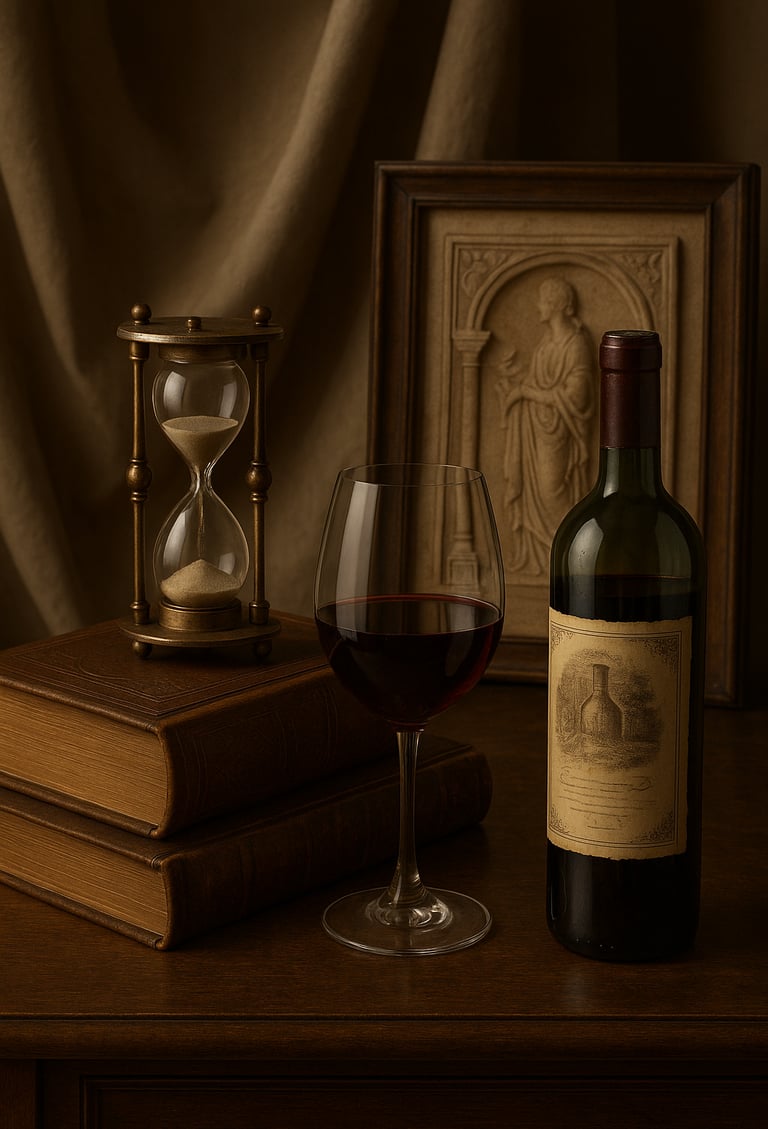
Introduction: When Time Becomes a Brand Language
In the world of true luxury, immediacy loses strength. Brands that build real value do not chase trends: they plant symbols, create language, and leave a mark. In wine —as in high watchmaking or heritage architecture— the long term is not a delay: it is a declaration. A winery that positions itself through time projects authority, confidence, and cultural vision. Because in luxury, elegance is not an aesthetic: it is an ethics of rhythm.
What Does It Mean to Think Long Term in the Universe of Luxury Wine?
It means making decisions that do not seek immediate approval, but future coherence.
Thinking long term implies:
Choosing vineyards that will give their best in 20 years, not in two.
Communicating from maturity, not from urgency.
Accepting that positioning is not virality: it is symbolic construction.
Respecting the rhythm of the product, the team, and the market.
Vega Sicilia (Spain) does not respond to the market calendar. Each wine is released only when the winery considers it has reached its ideal expression. Time becomes part of the value.
The Long Term as a Differentiator in the High-End Segment
In a market where many brands change their discourse with every vintage, those that uphold a vision become beacons.
The long term allows you to:
Consolidate a recognisable aesthetic.
Build editorial reputation in cultural media.
Attract sophisticated consumers who value permanence.
Withstand cyclical crises with a stable narrative.
Dom Pérignon (France) built its global positioning not only through quality, but through a narrative choreography where time (P2 and P3 editions) is part of its artistic discourse. Time does not pass: it becomes content.
Brands That Turned Patience into a Symbol of Power
✦ Champagne Dom Pérignon
The Plénitude editions (P2 and P3) do not simply age the wine: they reshape its narrative, aesthetics, perception of energy, and ritual of consumption.
✦ Vega Sicilia
Respect for the rhythm of the wine is non-negotiable. Its promise of quality needs no slogan: it is reinforced by the silent confidence of waiting.
✦ Hermès (fashion, France)
It does not follow trends. It builds heritage. Each piece coexists with past and future collections. This is exactly how a wine brand should think if it wishes to age in the consumer’s mind.
Mistakes That Compromise Long-Term Positioning
Adjusting the discourse to seasonal marketing.
Making reactive decisions in response to competition.
Investing in tactics without a structural strategic vision.
Communicating in a dispersed or contradictory way.
Prioritising the number of releases over symbolic depth.
Premium positioning is not improvised: it is cultivated like a complex vintage —with patience, selective pruning, and broad vision.
How to Design a Brand That Builds Legacy
Define a vision that transcends contingencies. What do you want to represent in 10 years, not at the next wine fair?
Create a visual and verbal aesthetic coherent through time. Allowing evolution, but not rupture.
Invest in durable editorial content. Not only in posts, but in thought: books, podcasts, archives, cultural memory.
Choose your presences with curatorial intention. Where does your brand appear? With whom does it dialogue? What does that mean for the future?
Conclusion: Time as a Strategic Asset in Luxury Wine
The brands we admire today in the high-end segment were never urgent. They were precise, patient, and faithful to a profound vision. 🍷 Because in luxury, time does not subtract value —it multiplies it. And brands that think in the long term not only age well: they leave legacy.
