

The effect of waiting
How maturation creates emotional value
7/2/2026
The buyer of Bordeaux en primeur pays for a wine that does not yet exist in bottle. They buy it without having tasted its finished form, without knowing exactly how it will evolve, and knowing they will not drink it for years. And they do it anyway.
That act — repeated every year by the most sophisticated buyers in the world — is the most honest demonstration I know of the power of time well communicated. It is not blind faith. It is trust built over decades by producers who understood that time is not an obstacle between the wine and the consumer. It is part of the product.
That is the effect of waiting. And very few brands, inside or outside wine, have learned to design it with that precision.
What time does that price cannot
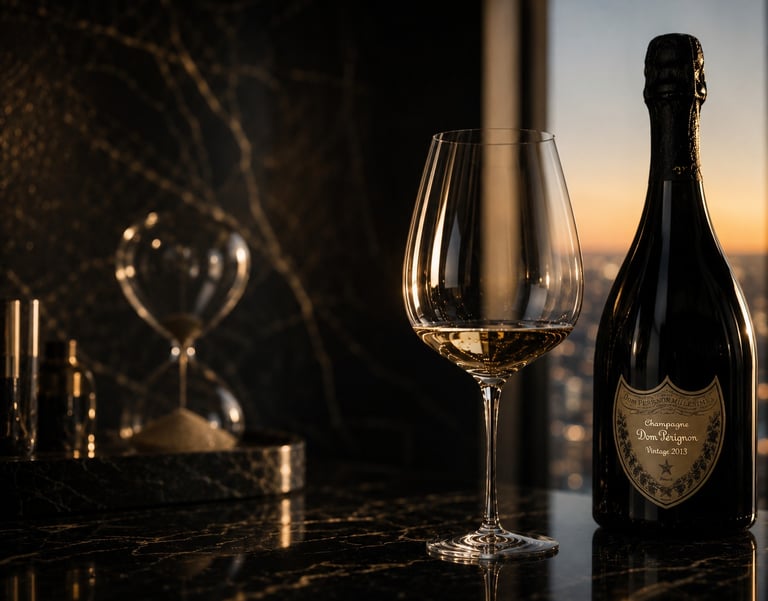
Dom Pérignon P2 reaches the market decades after its original harvest. Not as a rarity or a collector's whim. As an argument. The wait does not justify the price — the wait is the price. Whoever buys a P2 is not buying an aged wine. They are buying the time someone decided to invest in it when no one was watching.
That distinction is crucial for any brand that wants to build sustained emotional value. It is not about making the consumer wait for logistical reasons. It is about making the wait itself part of the experience — something the client feels, anticipates, and ultimately remembers.
Sassicaia understands this with a clarity that few Italian estates replicate. Every vintage has a narrative that evolves. The estate does not rush delivery to market. Its scarce and matured presence elevates the intellectual and emotional perception of each bottle. Not because it is marketing. Because it is coherence.
Living it with your own wine
At a formal tasting at the Hyatt in Mendoza, my winemaker presented Andesine among her wines — without revealing that I was behind the project. Tim Atkin scored it: 94 points.
That number, obtained blind, without a name or a known story, was the most honest validation I could have received. The wine spoke for itself.
And yet, in that moment, the temptation to launch it was real. It was technically ready. It had the points. It had the story. Why wait longer?
I waited because there was something the wine still did not have: the bottle time that would make it fully enjoyable for whoever opened it without knowing anything about its origin. A wine that surprises in a blind tasting is one thing. A wine that surprises at someone's table when they open it for the first time, without context, is another.
Andesine launched on 19 March 2026. Four years from harvest. And what I understood in that process — with my own wine, not a client's — is that waiting is not patience. It is respect for whoever is going to receive what you made.
The most common mistake: Waiting without narrating
The wait only builds value when it is accompanied by a narrative that sustains it. A winery that disappears for two years and reappears with a launch that has no context has not generated anticipation. It has generated forgetting.
The premium client detects when a wait is strategy and when it is improvisation. And that detection is not intellectual — it is emotional. It is felt in the coherence of everything surrounding the wine: the communication during ageing, the ritual of the launch, the way the product arrives in the hands of those who receive it.
Hermès does not make its clients wait for Birkin bags because it cannot produce more. It does so because it understands that desire needs time to mature. Whoever waits for a Birkin is not frustrated — they are building a relationship with the object that, when it finally arrives, is completely different from that of someone who simply bought it.
In wine, the same principle applies — and it is being underused by most producers who could benefit from it.
What waiting builds that nothing else can
Whoever buys en primeur, whoever waits years for a limited edition, whoever opens a bottle they kept for a decade — that consumer is not simply drinking a wine. They are completing a process they were part of. That active participation in the maturation of an object is what generates the emotional density that no campaign can manufacture.
And it is irreproducible. Because the time that consumer waited belongs only to them.
A brand that understands this does not design products. It designs processes of desire. The difference between the two is the difference between a wine that is bought and a wine that is waited for.
