

The Brand as a Sensory Space
5/14/2026
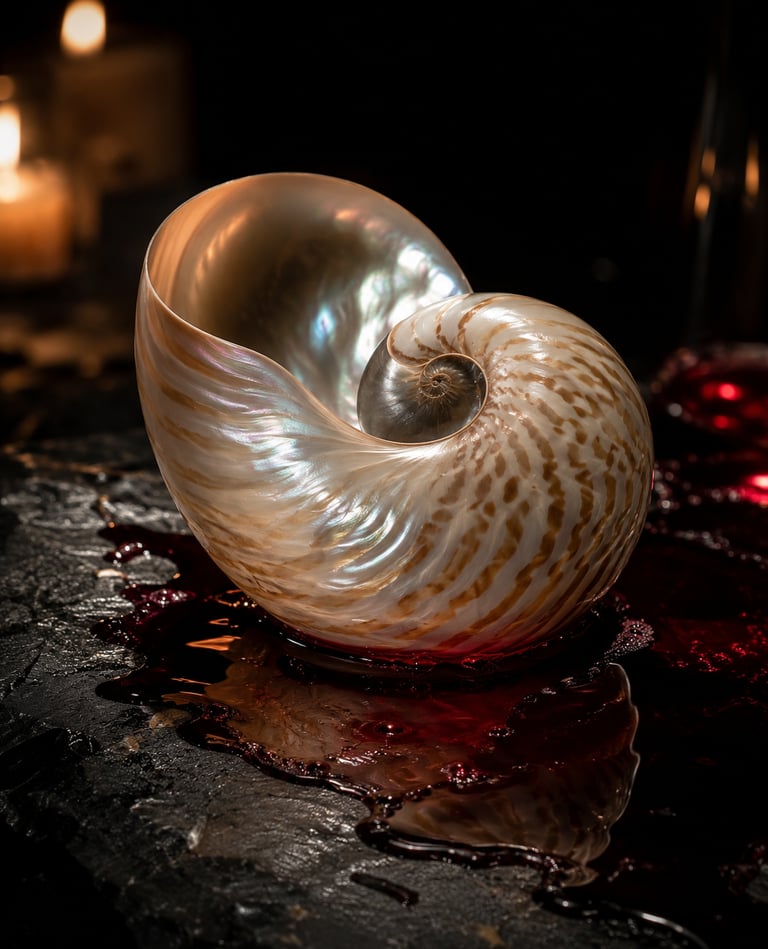
In more than a thousand wineries visited across five continents, nobody had ever placed a seashell in my hand before I tasted a wine.
At Creation Wines, in Hemel-en-Aarde, the first thing one perceives upon arrival is not a label or a discourse. It is a smile. Then, the space: an almost cubic glass structure, completely integrated into the vineyard. One does not enter a tasting room — one enters the landscape. There are flowers. There are always flowers. And there is a subtle aroma that takes a moment to identify: buchu, a plant from the South African fynbos growing across those hills. I brought dried leaves back to Madrid. I own perfumes containing it. And yet, the aroma at Creation possesses something none of those versions reproduce — because it belongs to that place and no other.
Then they hand you the seashell. Completely polished, varnished, with an almost pearlescent texture. The instruction is simple: taste the wine. Then place the shell against your ear — that oceanic sound, that vibration — and taste again.
The wine changes. Or more precisely: your ability to perceive it changes.
It was the first time, after more than a thousand visits, that someone demonstrated to me through an object what neuroscience has documented for years: that what we call flavour is not simply chemistry in the mouth. It is the result of everything the nervous system is processing simultaneously. Sound, texture, light, memory, expectation. A winery understanding this is not decorating an experience. It is designing perception.
When the Space Contradicts the Wine
I have also been in the opposite place.
A winery reception during Spanish summer, outdoors, beneath the midday sun. A spectacle nobody had requested but everyone was expected to endure standing, in the heat, while the group grew increasingly exhausted. When the wine finally arrived — a wine deserving attention — nobody remained capable of giving it any. The body was asking for shade and water, not aromatic complexity. The experience had been designed to impress, but it had forgotten that the receiver of all that impression was a human being with body temperature, with fatigue, with sensory thresholds already saturated by sun and waiting.
The wine could not overcome that. Not because it was poor. But because the context had defeated it before it even reached the glass.
I have also seen the opposite mistake: wineries investing in label redesigns and terroir discourse when the problem is earlier and deeper. Terroir exists — but rigorous study and real differentiation between wines do not always exist alongside it. And regardless of how sophisticated the packaging may be, the consumer who truly knows how to drink recognises this immediately. A label cannot create an identity the wine itself does not sustain.
The Most Ignored Sense
Of all the elements composing a sensory winery experience, sound is the one most systematically neglected.
It is not the same to taste a wine accompanied by soft native music, or by a symphonic piece breathing at the same rhythm as the glass, as it is to taste it beside construction noise, a poorly calibrated air-conditioning system, or an overly loud conversation at the neighbouring table. The impact upon the palate is not the same. Not because it is suggestion — but because everything we perceive consists of waves. Vibrations. Molecules in motion. Sound does not accompany the wine: it modifies it.
And time does as well. One wine after another, without pause, without silence between one and the next, collapses the capacity for attention. The subtleties disappear not because they are absent from the wine, but because the sensory system no longer possesses space to register them. The rhythm of a tasting, the silence between glasses, the pause before speaking — all of this is design. And very few wineries treat it as such.
What Separates a Visit from an Experience
A visit informs. An experience transforms.
The difference does not lie in budget or architecture. It lies in whether someone, at some point in the design process, asked: what is this person going to feel when they arrive, while they are here, and after they leave? Not what they are going to think. Not what they are going to remember having read. But what they are going to feel — in the body, before the intellect intervenes.
Creation understood this through a polished seashell. Not through a brochure. Not through a sommelier reciting soil compositions. Through an object fitting into the palm of the hand and silently changing everything that follows.
That is sensory design. And in the world of fine wine, it is one of the most powerful and least imitated competitive advantages that exists — precisely because it cannot be copied with money. It is built through intention, through time, and through an understanding of the human being extending far beyond marketing.
