The accord before the technique
What a chef teaches a perfumer — and vice versa
SCENT AND STORY
5/6/2026
Eugénie Béziat does not work with recipes. She works with accords. Dora Baghriche does not either. That shared language — which neither of them needed to explain to the other when they met on the stage of Paris Perfume Week — was the first sign that we were facing something more than a conversation between disciplines. It was the recognition of a common method that two crafts had developed separately and which, once named, turned out to be the same.
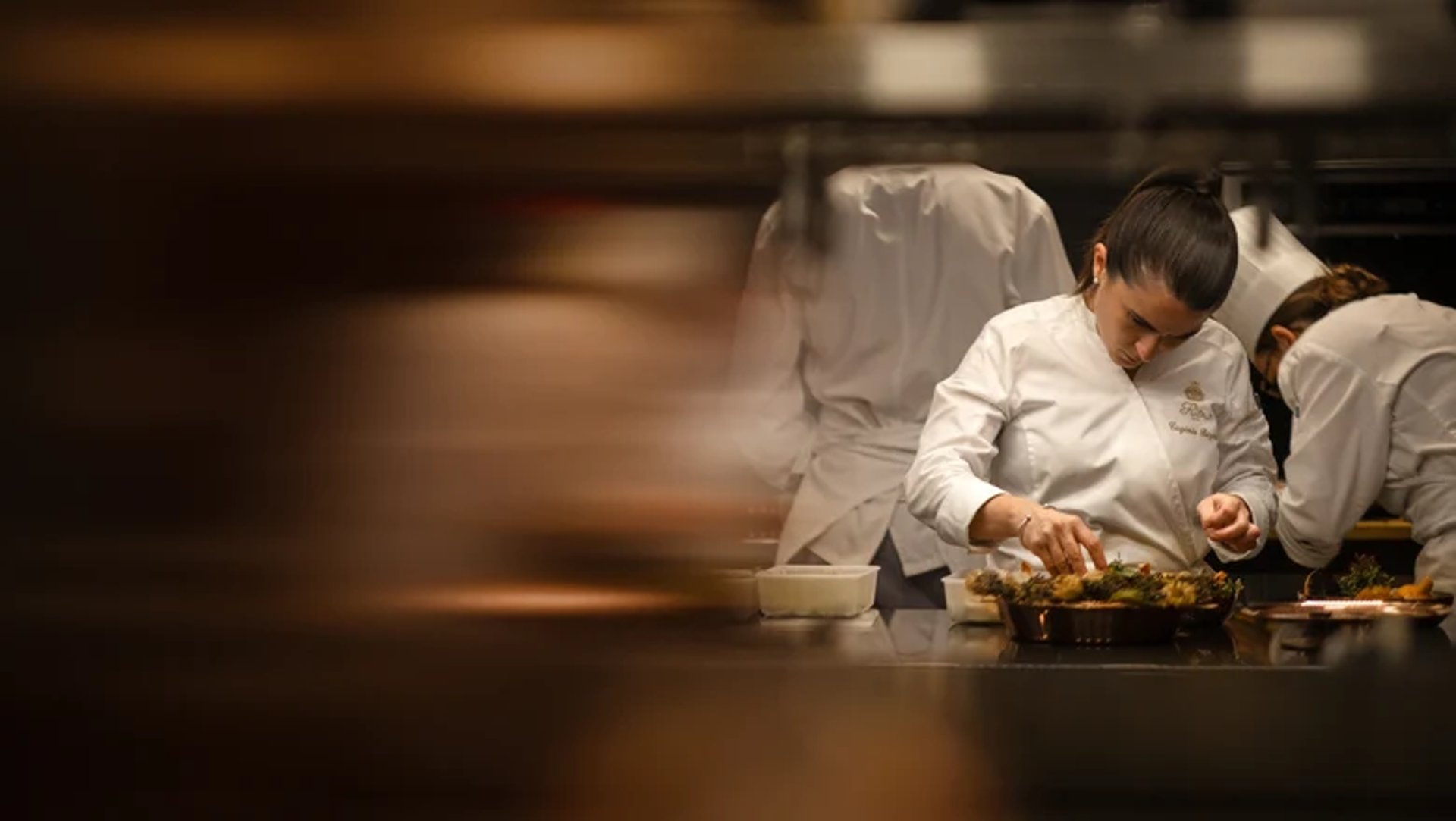
Dora Baghriche is a Master Perfumer at Luzi. Eugénie Béziat is Executive Chef of Espadon at the Ritz Paris. Two women working with different materials, in different kitchens, for audiences that rarely overlap. And yet, when moderator Sarah Bouasse asked them to describe their creative process, they used the same word.
The concept of accord — in perfumery, in music, in gastronomy — describes something greater than the sum of its parts. An accord is not a list of ingredients coexisting together. It is a relationship between ingredients that produces something none of them individually contains.
The jasmine note plus the rose note do not create the floral accord of a classic chypre — they create a sum. The accord requires something more: specific proportions, molecular interactions, sometimes a third element acting as mediator between the other two. And it requires something that does not exist in any catalogue: the eye — or the nose, or the palate — of the person who knows how to recognise when the parts have found their relationship.
The same happens in wine. When I advise a winery on blending, the first question is not technical — it is not what percentages of each variety, nor what type of barrel. It is: what do you want this wine to say? What is the accord you are seeking? Without that answer, the most sophisticated technique produces precision without soul. With that answer, even a simple formula can possess memory.
Dora Baghriche and Eugénie Béziat had arrived at this through different paths. But they had arrived at the same place.
What Dora described — and what resonated directly with the parallel conversation I had during the week with another creator working at the intersection of cuisine and olfaction — is that the accord precedes the technique. Always. If you cannot describe the accord you are seeking, if you are not clear about the relationship you want between the elements, the most sophisticated technique in the world cannot save you.
There is a phrase I heard during that other conversation which I find exact: if you cannot describe the accord, you are not in accord with what you created. Technique is the how. The accord is the what and the why. And without those two, the how is noise.
Eugénie Béziat spoke about something that in fine dining is taken for granted but rarely named with such clarity: the difference between a dish that is well executed and a dish that possesses memory.
A well-executed dish fulfils its role. Correct temperature, appropriate textures, flavours in balance. A dish with memory leaves something behind after the final spoonful disappears — an impression that cannot be reduced to its components, that persists as a whole even when you can no longer access any of its parts.
That persistence does not come from technique. It comes from the accord. From having found the relationship between the ingredients that produces something greater than their sum. And from having trusted that relationship enough not to over-intervene.
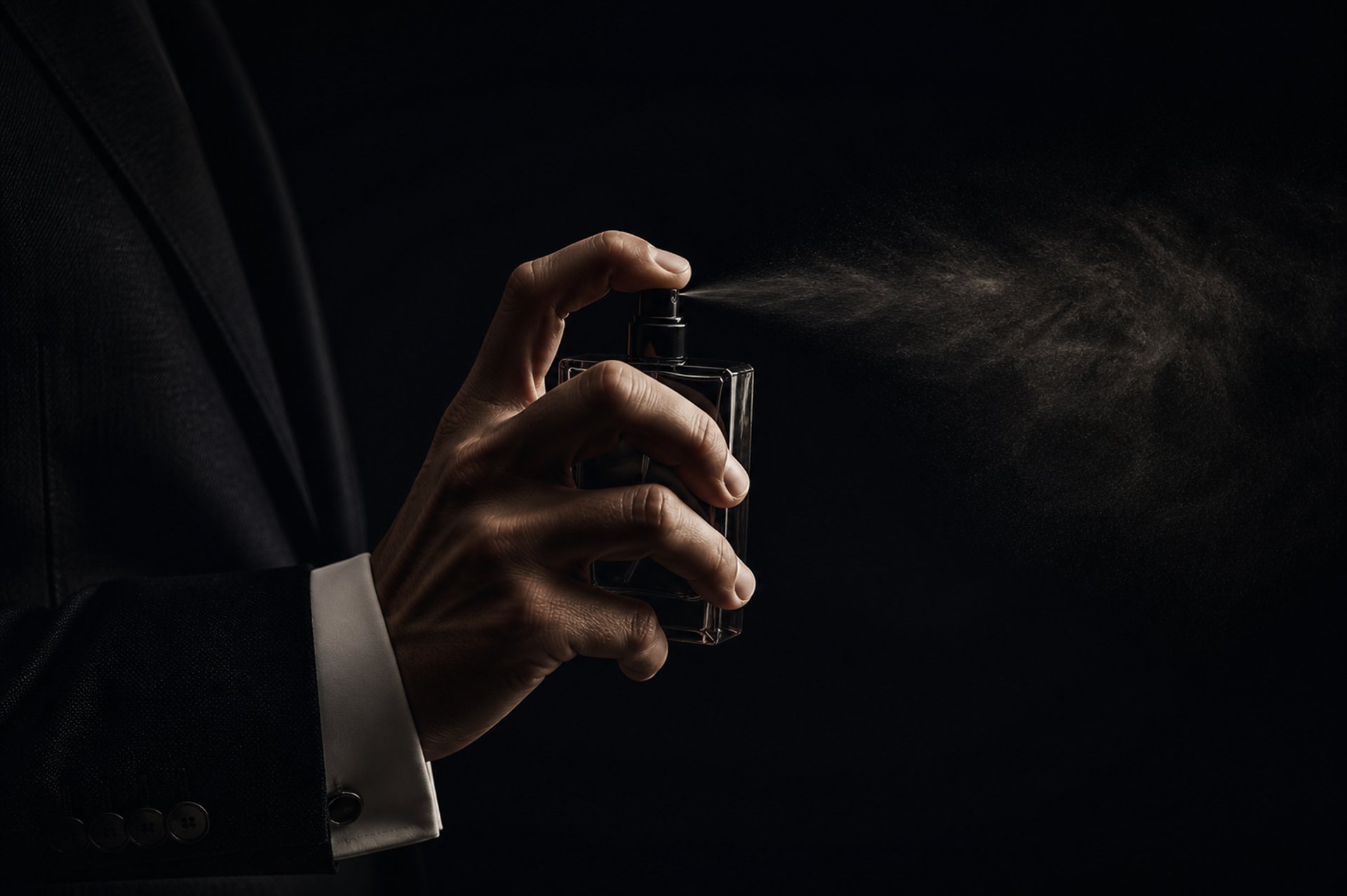
The parallel with perfumery is direct. A perfume with accord possesses what in French is called sillage — that presence within absence, that trace remaining when the person is no longer in the room but their fragrance still inhabits the air. It is not merely projection — it is coherence. The sensation that all the notes, from opening to base, belong to the same thought. Like a musical phrase remembered in its entirety even if you cannot hum each individual note.
Not all well-formulated perfumes possess this. Not all well-executed dishes possess memory. The difference is not one of technique — it is whether the accord was found before technique intervened, or whether technique attempted to build without accord and ended up producing something correct but empty.
There was a moment during the panel that felt to me like the most revealing of the entire conversation. Someone asked — I cannot remember whether it was Sarah Bouasse or someone from the audience — how they know when the accord is complete. How the moment is recognised when the composition contains what it needs and any additional element would compromise it.
Eugénie Béziat answered first. She said she knows when the dish produces a specific emotion in her — not technical satisfaction, but something closer to recognition. Like finding something you had been searching for without knowing exactly what it was.
Dora Baghriche answered afterwards. She said that in perfumery, that moment is recognised through absence: when you stop wanting to add something. When the composition defends itself and any additional intervention feels like interference.
They are two different descriptions of the same phenomenon. The complete accord is not built — it is found. And it is recognised because it produces a response in the person perceiving it that differs from the response to any mere sum of parts.
That is precisely what luxury should produce. Not technical admiration — recognition. The sensation that something was being sought without your knowing you were seeking it, and that it has just appeared.
What interests me strategically about this conversation — beyond its value as an intellectual experience — is what it reveals about the construction of luxury.
Luxury is not technical complexity. It is not price. It is not rarity, although all those elements may contribute. Luxury, in its most precise sense, is the experience of an accord transcending its components — producing something that cannot be reduced to a list of ingredients, the cost of materials, or the manufacturing process.
And that — that impossibility of reduction — is also the greatest protection against imitation. A list of ingredients can be replicated. The accord connecting them cannot be replicated if that accord emerged from a decision preceding the technique and determining which materials could enter and which could not. That structural decision is invisible in the final result — and it is exactly what makes the result what it is.
Dora Baghriche makes that decision before opening any catalogue. Eugénie Béziat makes it before entering the kitchen. Both know that without that prior decision, whatever follows is execution without direction.
There is an extension of all this directly connected to my work in wine, which I found in a conversation on the margins of the main panel.
CPL Aromas is developing applications of its AromaSpace technology — headspace analysis combined with perfumer interpretation — to create olfactory references for varietal wine aromas. Lychee in Gewürztraminer. Cherry in Pinot Noir. Raspberry in a young Merlot.
The problem this application solves is one I know well: communicating wine aromas to non-expert audiences is genuinely difficult because descriptors assume previous sensory experience with those materials, which does not always exist. A sommelier may say that a Gewürztraminer smells of lychee — but if the listener has never eaten lychee, the description builds no image at all.
The AromaSpace solution — capturing the profile of lychee with enough fidelity for it to function as an educational reference during a tasting — is exactly the logic of accord applied to sensory communication. It is not about reproducing lychee. It is about capturing the relationship between its aromatic components in a way that activates recognition in the person smelling it.
The accord as a tool of translation between disciplines. Between wine and language. Between experience and understanding.
At the end of the panel, when Dora Baghriche finished answering the question about recognising the complete accord, Eugénie Béziat smiled from her chair. It was the smile of someone who has just heard in another language something she has known for years in her own.
That smile seemed to me the most exact image of what an accord produces when it works: the recognition of something already existing, something there before anyone named it, something only needing the precise moment to become visible.
It is not built. It is found. And when it appears, one knows.
When was the last time something you smelled, tasted or heard produced that in you — not admiration, but recognition? And can you trace backwards which decision made it possible?
This chronicle forms part of the material shaping Diario de Nariz Vol. IV — a journey through the universe of niche and ultra-niche perfumery: Paris Perfume Week, Niche Show London, Grasse Perfume Week, and the perfumeries preserving the soul of the craft.
Photographs: Screen from the talk “Le Goût et l'Odeur du Luxe” with full programme · Panel on stage at Paris Perfume Week by NEZ — Sarah Bouasse, Dora Baghriche, Eugénie Béziat · Official portraits of Dora Baghriche (Master Perfumer) and Eugénie Béziat (Executive Chef, Espadon at Ritz Paris).
María Laura Ortiz Chiavetta — Aroma Storyteller
Winelux Scent & Story