

Maserati and 100 years of the trident
How a Centenary Brand Turns Time into Its Most Valuable Asset
WINE AND FASHION
6/4/2026
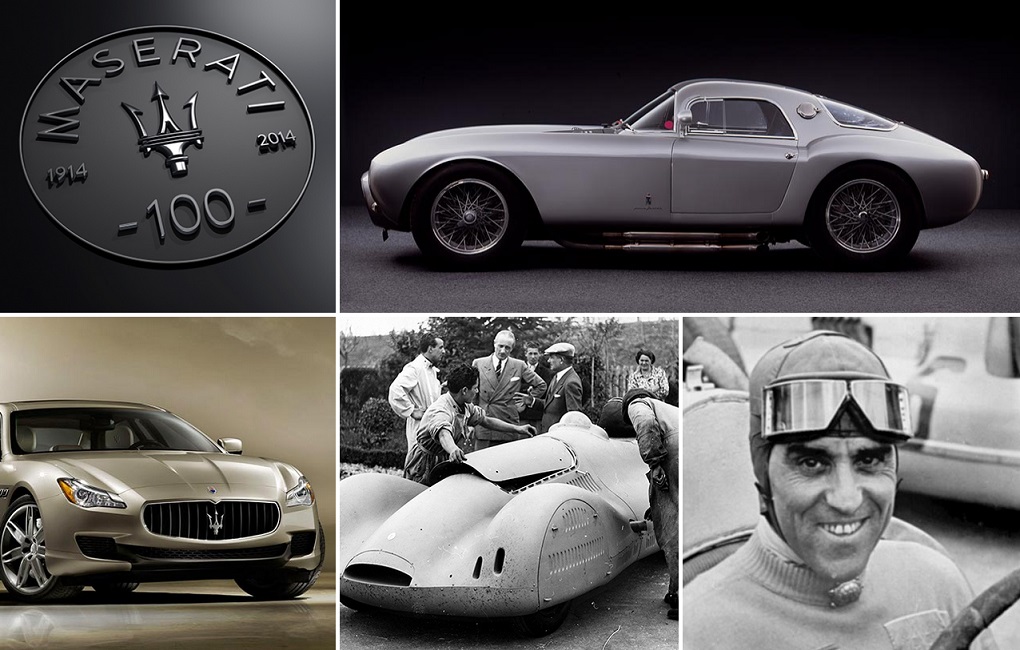
How a Centenary Brand Turns Time into Its Most Valuable Asset
Luxury Spain Congress 2026 · Wellington Hotel & Spa, Madrid
There are brands that celebrate 100 years with a campaign. And there are brands that turn 100 years into a philosophical argument about why they exist. Maserati belongs to the second group, and on June 2nd at the Luxury Spain Congress in Madrid, Laura Ramírez, Marketing & PR Manager of Maserati Iberia, explained with remarkable precision why that distinction matters far more than it may seem.
The Trident was born in Bologna in 1926, in the heart of Italy's Motor Valley. Its first major victory came that very same year at the Targa Florio. A century later, the brand celebrates that legacy not through nostalgia, but through an active question:
What does it mean to build something that will last another 100 years?
Time as a Raw Material
At a congress where the concept of time surfaced in almost every conversation — from haute horlogerie to luxury tourism — Maserati contributed one of the most tangible arguments: Time is not the context in which luxury happens. Time is luxury itself.
Laura Ramírez framed it through experience: a Maserati client does not buy a car. They buy a relationship that begins before delivery and continues long afterwards. The Maseratisti — as the brand calls its community — are people seeking distinction not through what they own, but through how they experience what they own. The distinction is subtle, but it is everything.
The Fuoriserie programme — Maserati's extreme personalisation division — pushes this philosophy to its operational limit. Every combination of materials, colours and finishes is unique. The resulting automobile has no equivalent anywhere in the world. In luxury industry terms, it is what Audemars Piguet calls "an object to transmit" — something one never fully owns because its value increases with time and with the story it accumulates.
Heritage That Is Not a Museum
What interested me most about Maserati's presentation was not the centenary itself. It was how they are using it. Jon Manso of Balenciaga, also present at the congress, explained something that resonates perfectly here: A brand archive is not a museum. It is raw material. Balenciaga has 55 years of archives and uses them as a laboratory for the present. Maserati has 100 years of racing, design and Italian craftsmanship — and uses them in exactly the same way.
The centenary campaign includes a voice few expected: Maria Teresa de Filippis, the first woman to compete in Formula One, who made her debut behind the wheel of a Maserati in the 1950s. Recovering that story is not nostalgic PR. It is proof that the brand was already where the world would eventually arrive. That is active heritage.
Activations That Money Cannot Buy
The St. Moritz Concours d'Elegance. Test drives on a frozen lake with professional drivers. Presence at the Salone del Mobile in Milan. Experiences at Madrid's Lázaro Galdiano Museum featuring private visits and tactile material personalisation sessions.
None of these activations sells a car directly. All of them sell something more valuable: The feeling of belonging to a world that is not available to everyone. The Luxury Barometer 2026 — presented at the same congress by Andersen Consulting and LLYC based on a sample of more than 1,200 consumers — confirmed that the number one attribute associated with luxury in Spain is exclusivity, cited by 51.2% of respondents. Not price. Not recognisable branding. Exclusivity.
Maserati has known this for 100 years. That is why it does not produce to satisfy every demand. That is why its activations create experiences that are impossible to replicate. That is why the centenary is not a number. It is a conversation about what it means to build something that time does not wear down, but enriches.
What Comes Next
Laura Ramírez revealed in Madrid that the roadmap includes portfolio expansion through hybrid and electric powertrains, as well as potential entry into new segments. There will be announcements towards the end of 2026, a digital presentation in June, and a product range exhibition in Madrid in September.
Yet the most significant thing she said was not about product. It was about attitude. Maserati does not want to grow at any cost. It wants to grow while preserving exactly what makes its clients wait months for a personalised commission, travel across the world for a test drive on a frozen lake, or engrave the story of their lives into the materials of a Fuoriserie interior.
One hundred years after the birth of the Trident, that remains the hardest thing to copy.
Article based on the Luxury Spain Congress 2026, Wellington Hotel & Spa, Madrid, June 2, 2026. © María Laura Ortiz Chiavetta · Winelux
