

Hospitality with Its Own Voice
The Storytelling of Well-Crafted Silence
11/20/2025
Introduction: In Luxury, Every Gesture Is Communication
A visit to a winery can be a technical tour or a transformative experience. The difference is not made by the wine. It is made by the tone, the timing, the design of the experience, and the symbolic capacity of hospitality.
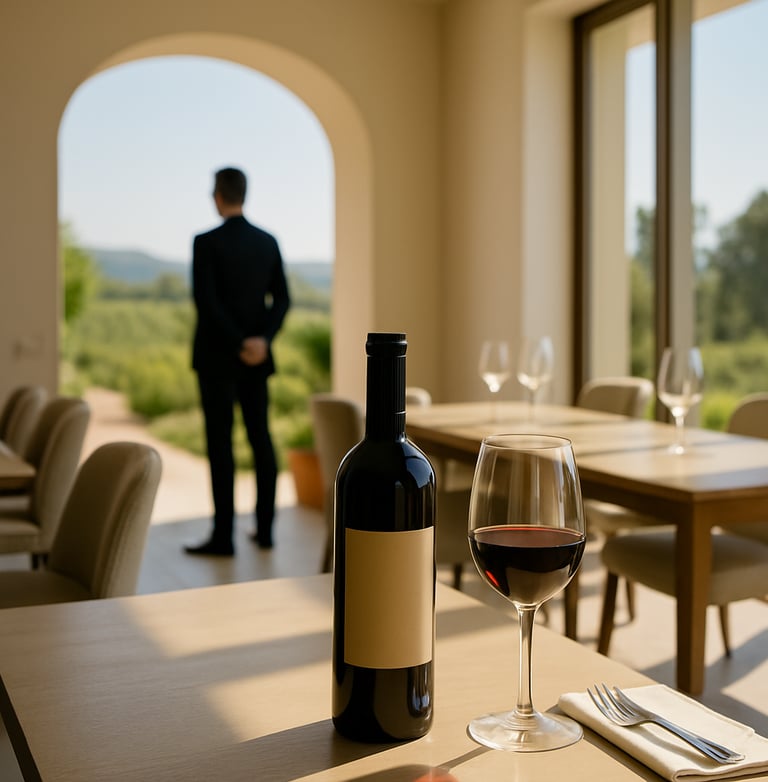
In the world of luxury, hospitality is never improvised. It is the emotional and sensorial translation of the brand promise. And in fine-wine estates, this hospitality should not be loud, nor invasive: It must be a firm voice that speaks softly, yet leaves a mark.
Hospitality As Experiential Storytelling
The fine-wine visitor does not seek spectacle or abundance. They seek belonging. They seek atmosphere. And that is achieved only by a brand that understands hospitality as its own language, not as a standardised service.
Château d’Yquem does not offer massive visits. It welcomes a few, speaks calmly, lets the place speak. Its hospitality is designed to move through detail, not display.
The Voice Of Hospitality: What It Says Without Speaking
A luxury visit does not need an extroverted guide, nor an endless technical speech. It needs:
Well-curated timing Spaces that express identity Silences administered with intention Small gestures with symbolic depth A team that does not act — it embodies the brand
Craggy Range (New Zealand): The staff does not repeat scripts. Each interaction flows like an intimate conversation, where the visitor becomes the protagonist of their own emotional narrative.
Mistakes That Dilute The Power Of A Luxury Visit
Visits overloaded with technical content. Timings imposed without observing the visitor’s state. Spaces where architecture and sound prevent introspection. Staff without aesthetic or emotional sensitivity. Mechanical repetition of institutional storytelling.
In luxury, the visitor does not want to feel guided: they want to feel understood.
Cases Where Hospitality Became A Symbol
✦ Zuccardi Valle de Uco (Argentina)
Architecture, gastronomy, landscape and coherent narrative. The environment does not distract: it reinforces an idea of modern origin and cultural sensitivity.
✦ Clos Apalta (Chile)
Every step is choreographed to communicate precision, introspection and connection with legacy.
✦ Castello di Ama (Italy)
A visit that integrates contemporary art, landscape and emotional narrative, with wine as the guiding thread. Hospitality becomes an emotional curation of the territory.
How To Build A Hospitality Experience With Its Own Voice
Designing an emotional rhythm: What are the moments of pause, revelation, contemplation?
Working the space as narrative: What does the tasting room say about the brand? What aesthetic experience does it generate?
Training the team as interpreters, not repeaters: Do they know how to read the visitor? Do they know when to speak, when to remain silent?
Incorporating elements that surprise with subtlety: A unique glass, a long silence, a small dedication, a light that shifts with the afternoon.
Conclusion: A Memorable Experience is Not The Most Showy — It Is The Most Coherent
In luxury, hospitality does not seek to impress. It seeks to touch an intimate, deep chord that makes the visitor not want to leave — or want to return.
🍷 Because when hospitality has its own voice, the brand stops speaking… and begins to resonate.
